
How does the FCA articulate a healthy Consumer Duty culture?

About
In module one, you will hear directly from our engagement with the FCA as they outline their expectations across three critical areas of the Consumer Duty: the culture that drives behaviour, the competence of the people delivering the service, and the evidence that proves these outcomes are being achieved.
We unpack key focus areas, regulatory expectations, practical applications, best-practice examples, and methods of evidence. Additionally, we provide a cultural and operational RAG self-assessment checklist to help you evaluate and elevate your current position.

1. Culture is the heart of Consumer Duty
“Consumer Duty & culture are integrated: You can’t have one without the other and expect to achieve success.”
In this video
Stephanie Chapman, Consumer Duty Delivery Manager at the FCA, discusses why the regulator places such emphasis on culture in driving the Consumer Duty. She also shares best-practice examples observed by the FCA.
Key learning outcomes from the FCA:
-
Consumer Duty and organisational culture are inseparable; success in one requires the other.
-
Leading firms are integrating the Duty into remuneration, incentive strategies, and individual performance objectives for every employee.
-
A healthy culture empowers staff to think critically and move beyond rigid processes to meet specific customer needs, particularly regarding vulnerability.
-
Data from the Institute of Customer Service suggests a direct correlation between high-quality customer service (driven by culture) and stronger financial performance.
-
Research shows that consistent cultural improvements have led to a steady rise in consumer trust over the last seven years, driving better Net Promoter Scores (NPS) and word-of-mouth recommendations.
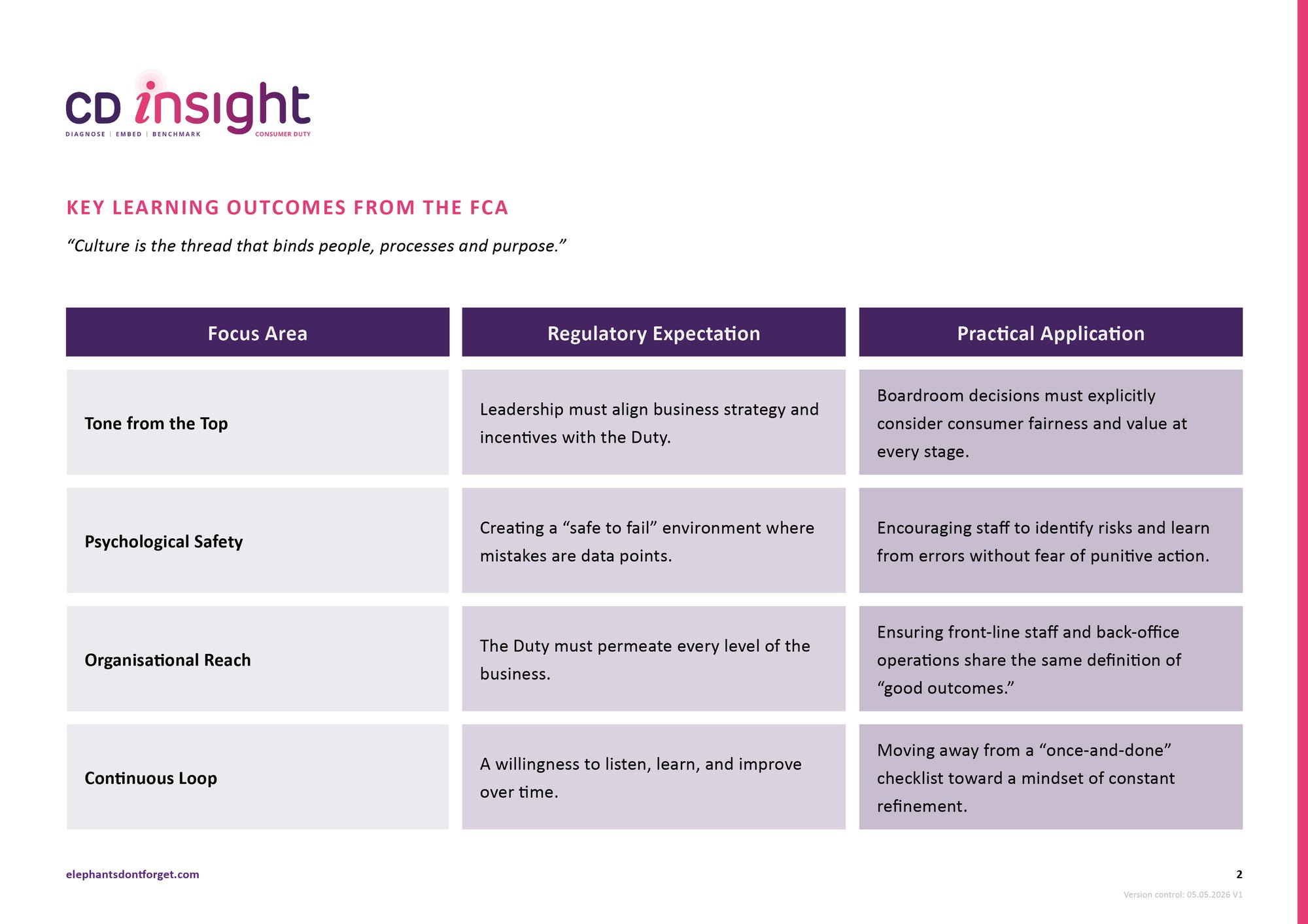
2. Culture is the thread that binds people, processes and purpose
“Culture is the bedrock of the Consumer Duty and the invisible thread that binds an organisation’s people, processes and purpose.”
In this video
Jonathan Pearson, Head of Department for Consumer Policy and Outcomes at the FCA, outlines the key expectations, questions, and demonstrable evidence points that firms must consider when articulating their culture.
3. It’s not a checklist; it’s a mindset to be lived everyday
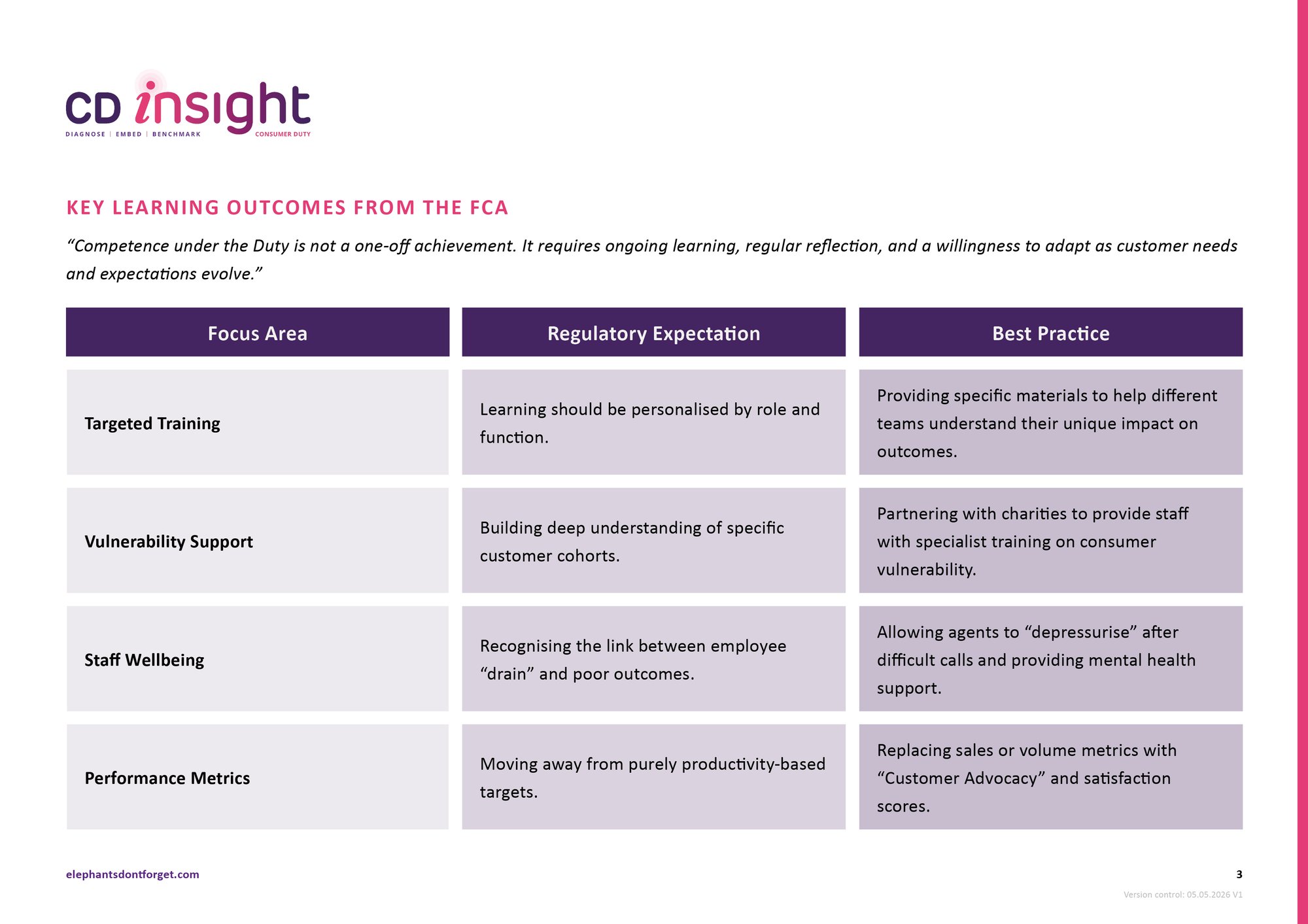
"Competence under the Duty is not a one-off achievement. It requires ongoing learning, regular reflection, and a willingness to adapt as customer needs and expectations evolve."
In this video
Jonathan Pearson, Head of Department for Consumer Policy and Outcomes at the FCA, explains that competence under the Duty is not a one-off achievement. It requires ongoing learning, regular reflection, and a willingness to adapt as customer needs and expectations evolve.
4. You need to have a culture of reviewing and reassessing
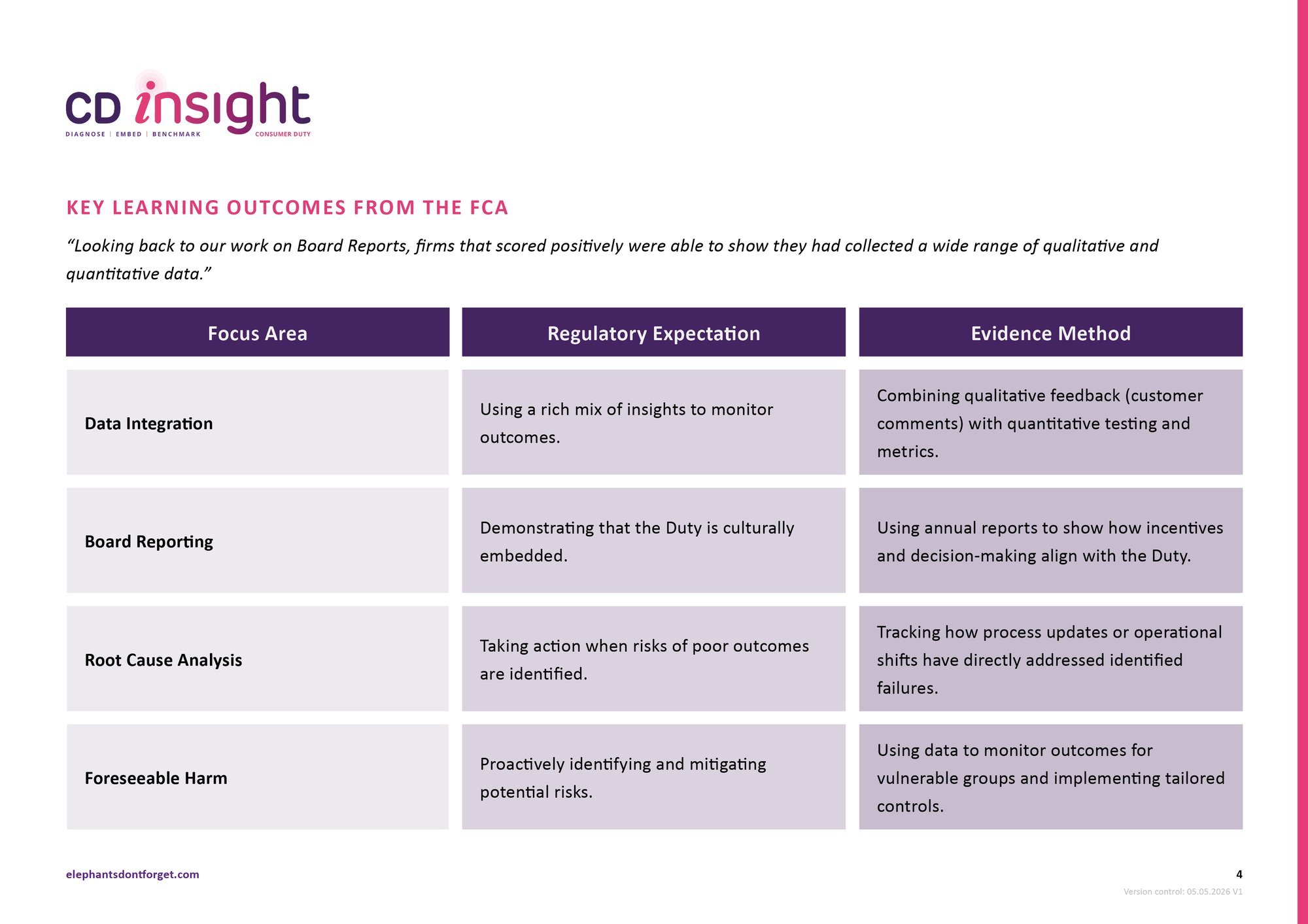
"Looking back to our work on Board Reports, firms that scored positively were able to show they had collected a wide range of qualitative and quantitative data."
In this video
Jonathan Pearson, Head of Department for Consumer Policy and Outcomes at the FCA, explains that monitoring customer outcomes is central to a culture of improvement. Essential to this process is gathering data, seeking feedback, and using those insights to drive continuous development.
Consumer Duty:
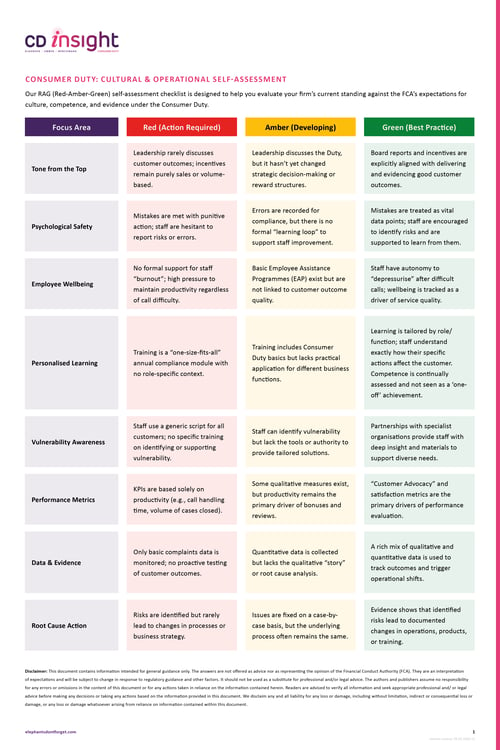
Cultural & Operational Self-Assessment
Our RAG (Red-Amber-Green) self-assessment checklist is designed to help you evaluate your firm's current standing against the FCA’s expectations for culture, competence, and evidence under the Consumer Duty.
How Consumer Duty Insight (CDi) helps
The FCA has made it clear that firms must foster a culture that aligns with continually supporting and improving their people, enabling them to make decisions that consistently benefit consumers.
Competence under the Duty is not static, nor is it a ‘once-and-done’ achievement for employees. The regulator requires firms to view competence and cultural measurement as the foundation of a robust outcome monitoring process. The challenge all firms face is how they demonstrate that the Duty is a mindset lived daily within their organisation – and how it is ‘woven into the fabric of their culture’.
CDi provides a range of cross-functional benefits, supporting firms to continually embed, assess, improve, and report on Consumer Duty progression.
